The first week of school sets the tone for everything that follows. The norms you establish, the language you introduce, the expectations you model… students absorb all of it before you've taught a single lesson.The start of the school year is the best time to lay the groundwork for a mentorship-ready classroom. Right now, in the first few days, when everything is still fresh and possible.Here's how to do it!

Start with culture, not content.
Before you introduce any curriculum, introduce your classroom values. What does effort look like here? How do you treat a mistake? What happens when something is hard?This is the foundation that makes mentorship meaningful. When students have a shared vocabulary for resilience, goal-setting, and growth before a mentor enters the picture, the mentor's message lands in a way that can actually take root.Here’s a simple first-day exercise:Ask students to finish the sentence "A champion is someone who..." and share their answers. You'll learn a lot about where they're starting from, and you'll plant the first seed of the Champion Mindset that the whole year builds on.
Build in space for authentic conversation.
Mentorship works when students feel safe enough to be honest. That safety doesn't happen automatically — it's built through routine.Consider adding a short weekly check-in to your classroom rhythm from the very first week. It doesn't need to be elaborate; it could be a show of hands, a one-word weather report, or a sticky note on the door. Use this as a way to signal early-on and often that your classroom is more than a place focused on academic performance, it’s a place where how you're feeling (how you’re really feeling) matters.This becomes especially important once your Athlete Mentor’s videos come into play. Students who are already in the habit of reflecting and sharing will engage more deeply in those conversations and get far more out of the program.
Set goals before the year gets away from you.
Week one is the ideal time to introduce goal-setting, not because students have big academic goals yet, but because they're still optimistic and open. That window closes faster than you'd think.Keep it simple! Students can share even one goal for what they want to learn. Revisit those goals at the midpoint of the year and again at the end. Watching those goals evolve becomes one of the most powerful proof points of growth you can show a student, a parent, or a school administrator.Athletes do this before every season. The best ones don't wait until they're already in the thick of competition — they set the intention first, then build toward it. Your students can do the same.Make your walls work.
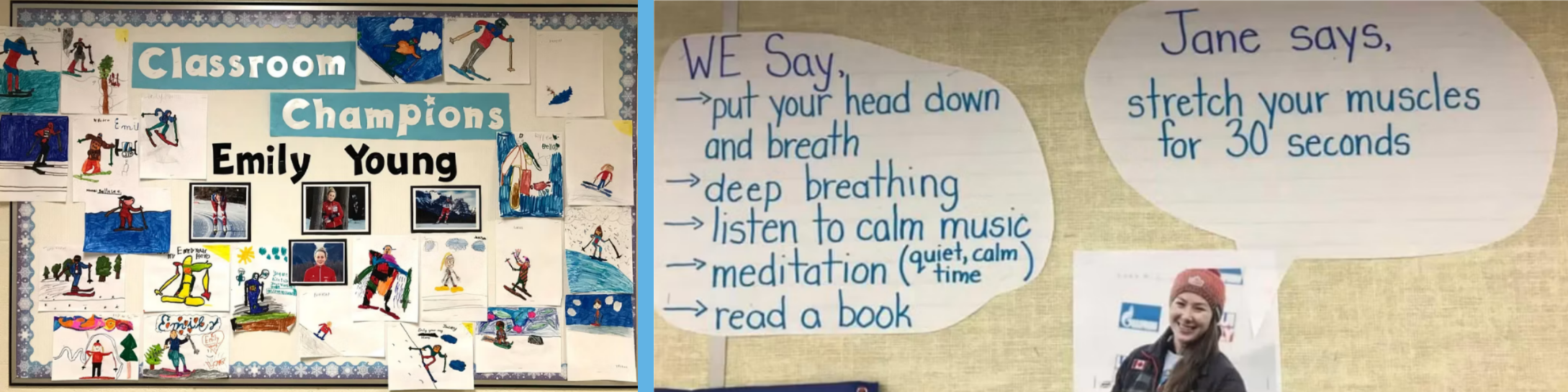
The physical classroom environment signals values right off the bat. Here are a few intentional choices you can make in the first week:- Post a working definition of the "Champion Mindset" somewhere visible with room to add to it as the year goes on
- Create a dedicated space for mentor content (video recaps, photos, student responses) that grows throughout the year
- Display student goals so students can cheer each other on
Loop in families.
A mentorship-ready classroom doesn't stop at the door. When families understand what the program is and why it matters, students get reinforcement at home that amplifies everything happening at school.A short welcome note home in the first week explaining that their child will be connecting with elite Athlete Mentors this year will go a long way. "What did your mentor talk about this week?" can become a powerful dinner table question for your students’ families.Check out your teacher dashboard for ready-to-print family resources!